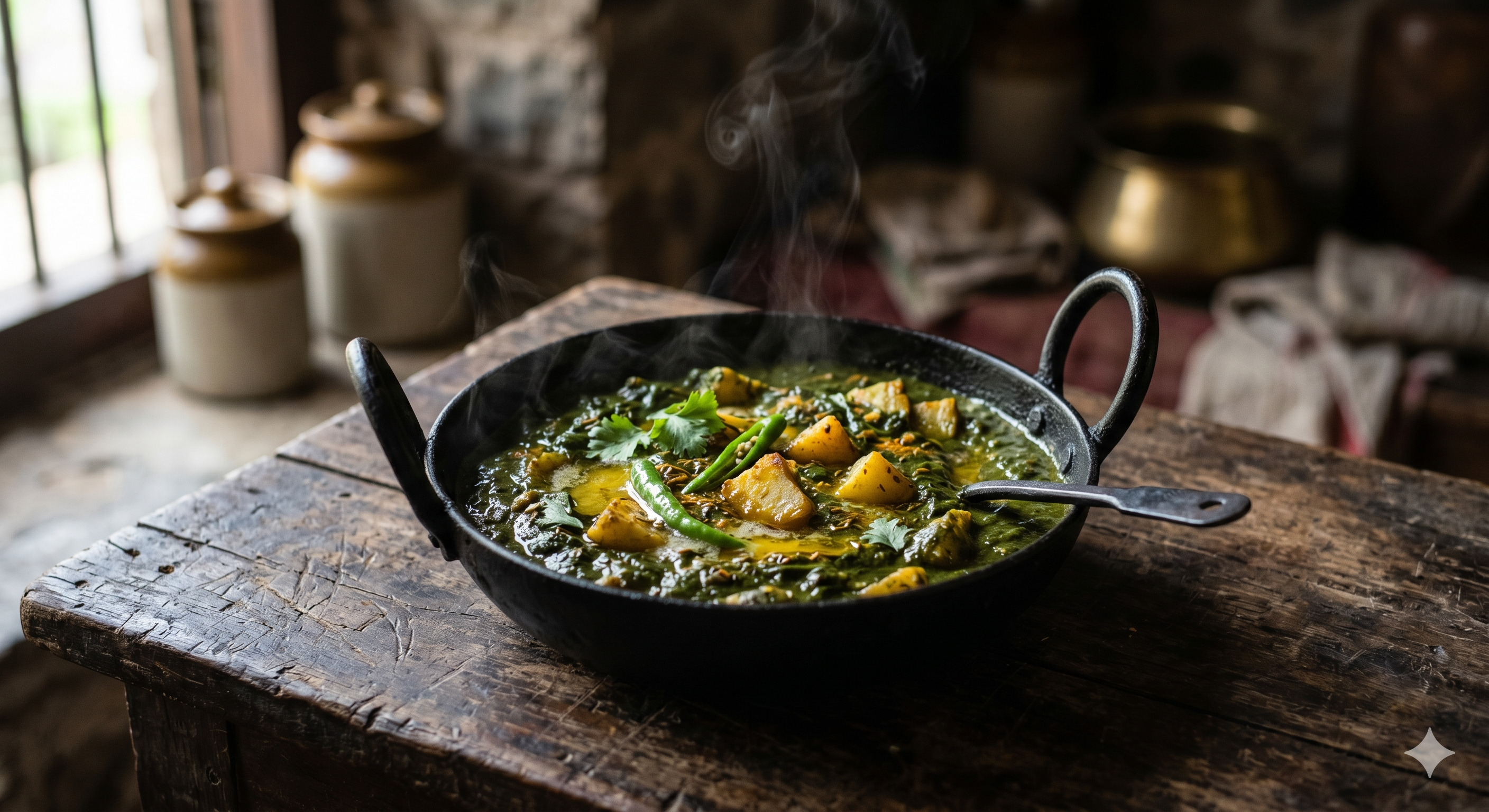
A chef at IHM taught me a ratio I have never forgotten. He was not teaching aloo palak specifically. He was teaching ratios — the idea that a recipe is just a ratio in disguise, and once you know the ratio, you do not need the recipe.
The ratio he gave me was for a green masala base: four parts spinach, two parts coriander, one part mint, half a part green chilli. That is it. No quantities. No grams. Just the relationship between the ingredients.
Chef Senthil's ratio
He said: once you know this ratio, you can make this base for one person or fifty. You can adjust the heat by changing the chilli. You can make it more herbal by pulling back the spinach. You are not following a recipe. You are working with a principle.
I built the aloo palak on that principle. Not the hotel version with blanched spinach and cream. Not the restaurant version that arrives bright green and tastes of nothing in particular. The version where you wilt everything down together in the same pan, where the spinach still has some character when it hits the plate, where the potato absorbs rather than sits in the sauce.
The recipe
- 400g fresh spinach (the ratio starts here)
- 200g waxy potatoes, boiled until just done
- 100g fresh coriander, stems included
- 50g fresh mint, leaves only
- 25g green chilli — adjust to your heat tolerance
- 1 medium onion, finely sliced
- 4 cloves garlic
- 1 inch fresh ginger
- ½ tsp cumin seeds
- Salt, to taste
- Oil or ghee — plus a small knob to finish
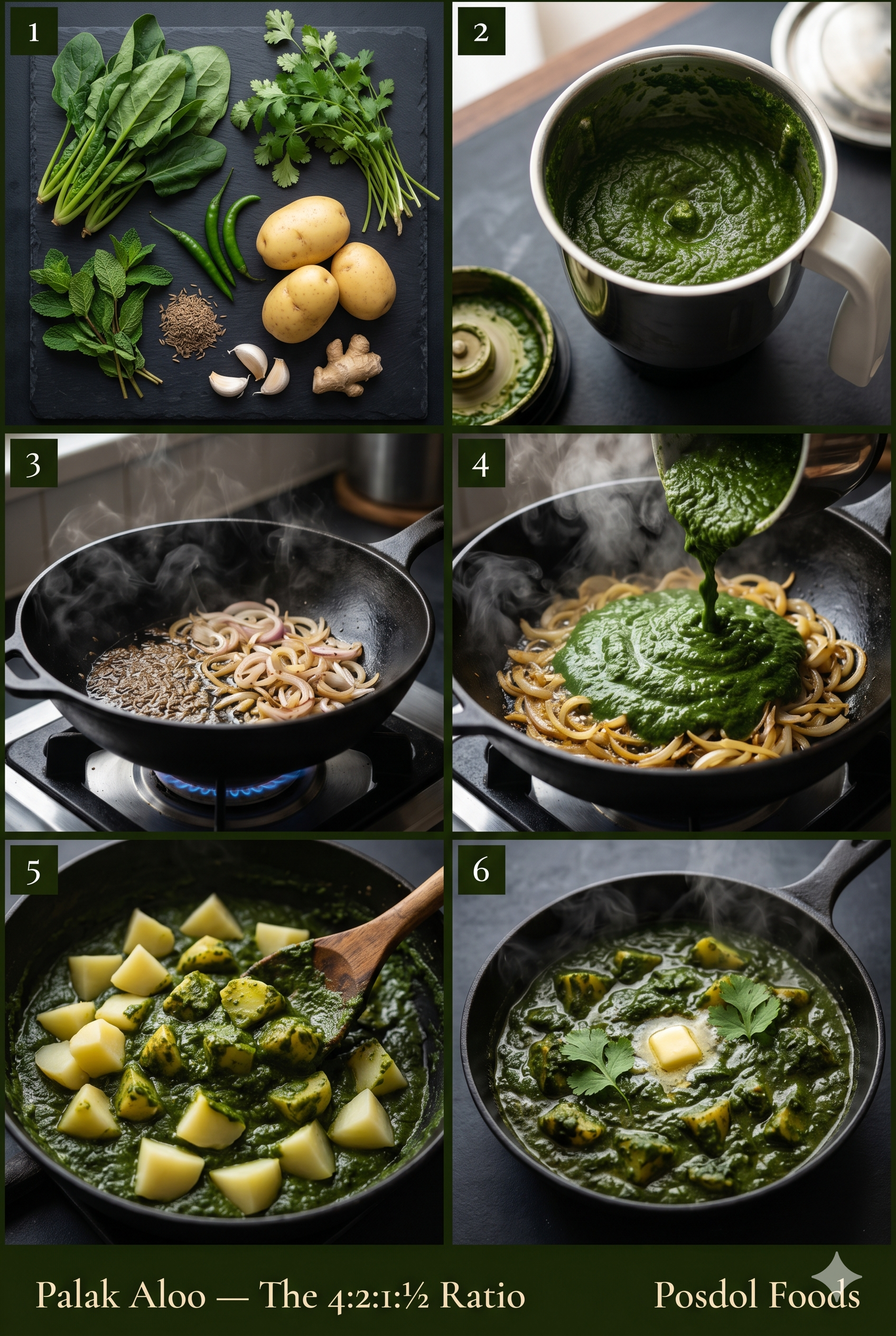
- Boil & prep the potatoes. Boil until just done — not falling apart. Cut into rough 2cm pieces once cool. Set aside.
- Make the green paste. Blend spinach, coriander, mint, and green chilli with as little water as possible. You want a thick paste, not a liquid. Too much water here and you spend the next twenty minutes cooking it off — and the colour goes.
- Build the base. Heat oil or ghee in a heavy pan. Add cumin seeds and let them crackle. Add the onion and cook until soft and beginning to colour — at least 10 minutes, do not rush. Add garlic and ginger paste; cook 2 more minutes.
- Cook the green paste. Add the blended paste. Cook on medium flame, stirring regularly, for 8–10 minutes. You are cooking out the rawness of the coriander and the water from the spinach. When it starts to pull away from the sides and darken slightly, it is ready.
- Add the potatoes. Fold them in gently — coated, not mashed. Salt generously. A small splash of water if the mixture looks too dry. Cover and cook on low heat for 5 minutes.
- Finish with ghee. Stir a small knob of ghee through right before serving. The correct quantity is always slightly more than you think it should be.
The bachelor's note
If you are cooking this alone and do not want to deal with fresh herbs: frozen spinach works. Use 200g frozen spinach as your base, add a small bunch of coriander (50g), skip the mint if you do not have it. The ratio will be off but the principle will hold. It will still be better than most versions you will eat outside.
The reason this recipe exists on this site is not because it is complicated. It is because it is one of those recipes where the teaching is more useful than the dish. Once you understand a ratio, once you understand that the relationship between ingredients matters more than the quantity, you start cooking differently. You start improvising instead of following instructions.
That shift — from recipe-follower to ratio-thinker — is what Chef Senthil was actually teaching. The aloo palak was just the vehicle.